
IoT Based Real Time Vibration Monitoring System
An IoT Based Real-Time Vibration Monitoring System is an advanced solution designed to continuously monitor and analyze vibration levels in industrial machinery. By leveraging IoT technology, this system provides real-time insights, predictive maintenance alerts, and remote monitoring capabilities, helping industries minimize unexpected failures and optimize operational efficiency.
Applications :-
- Manufacturing Plants
- Power Plants
- Oil & Gas Industry
- Cement & Steel Industries
- HVAC Systems
- Pumps, Motors & Compressors
- Heavy Machinery & Rotating Equipment
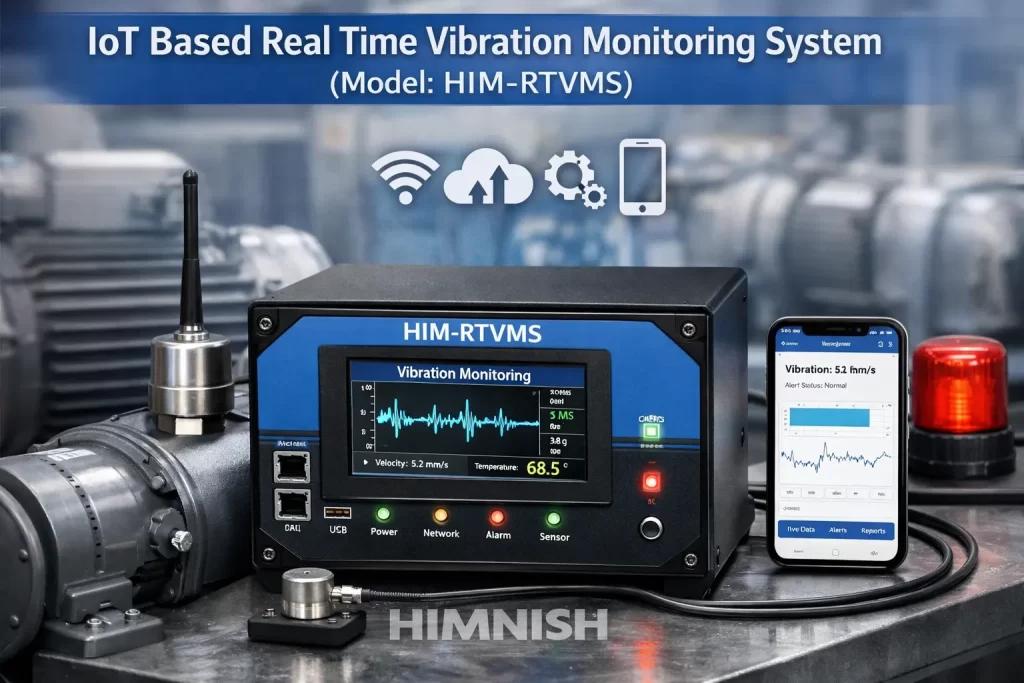
Model – HIM-RTVMS
Key Features
- Real-Time Monitoring: Continuous vibration tracking with instant alerts
- IoT Connectivity: Cloud-based data access from anywhere
- Predictive Maintenance: Early fault detection to prevent breakdowns
- Wireless Sensors: Easy installation without complex wiring
- Data Analytics Dashboard: Visual insights for better decision-making
- Multi-Equipment Integration: Monitor multiple machines simultaneously
- Custom Alerts & Notifications: SMS, email, or app-based alerts
Benefits
- Reduce Downtime: Detect issues before they cause equipment failure
- Increase Equipment Life: Timely maintenance improves durability
- Cost Savings: Avoid costly repairs and unplanned shutdowns
- Enhanced Safety: Prevent hazardous machine failures
- Improved Productivity: Ensure smooth and uninterrupted operations
How It Works
The system uses high-precision vibration sensors installed on critical equipment. These sensors collect vibration data and transmit it via IoT gateways to a cloud platform. Advanced algorithms analyze the data to identify abnormalities, providing real-time alerts and predictive maintenance recommendations.
Why Choose Our System
- Industry-grade sensors with high accuracy
- Scalable solution for small to large industries
- User-friendly dashboard and mobile access
- Reliable cloud infrastructure
- Customizable as per industrial requirements