Industrial motors are the backbone of modern manufacturing, powering critical equipment across sectors such as power generation, railways, oil & gas, mining, automotive, cement, steel, pharmaceuticals, and process industries. Any unexpected motor failure can result in costly downtime, reduced productivity, expensive repairs, and safety risks. This is why industries are increasingly investing in real time condition monitoring solutions to ensure continuous equipment reliability and operational efficiency.
Modern condition monitoring systems use advanced sensors, IoT technology, and intelligent analytics to monitor motor health 24/7. Instead of waiting for equipment to fail, maintenance teams receive real-time alerts whenever abnormal conditions are detected. This predictive approach minimizes downtime, improves asset performance, and reduces maintenance costs.
In this blog, Himnish Projects explains the benefits of real-time motor condition monitoring in industries, how online condition monitoring works, and why it has become an essential part of Industry 4.0.
What is Real-Time Motor Condition Monitoring?
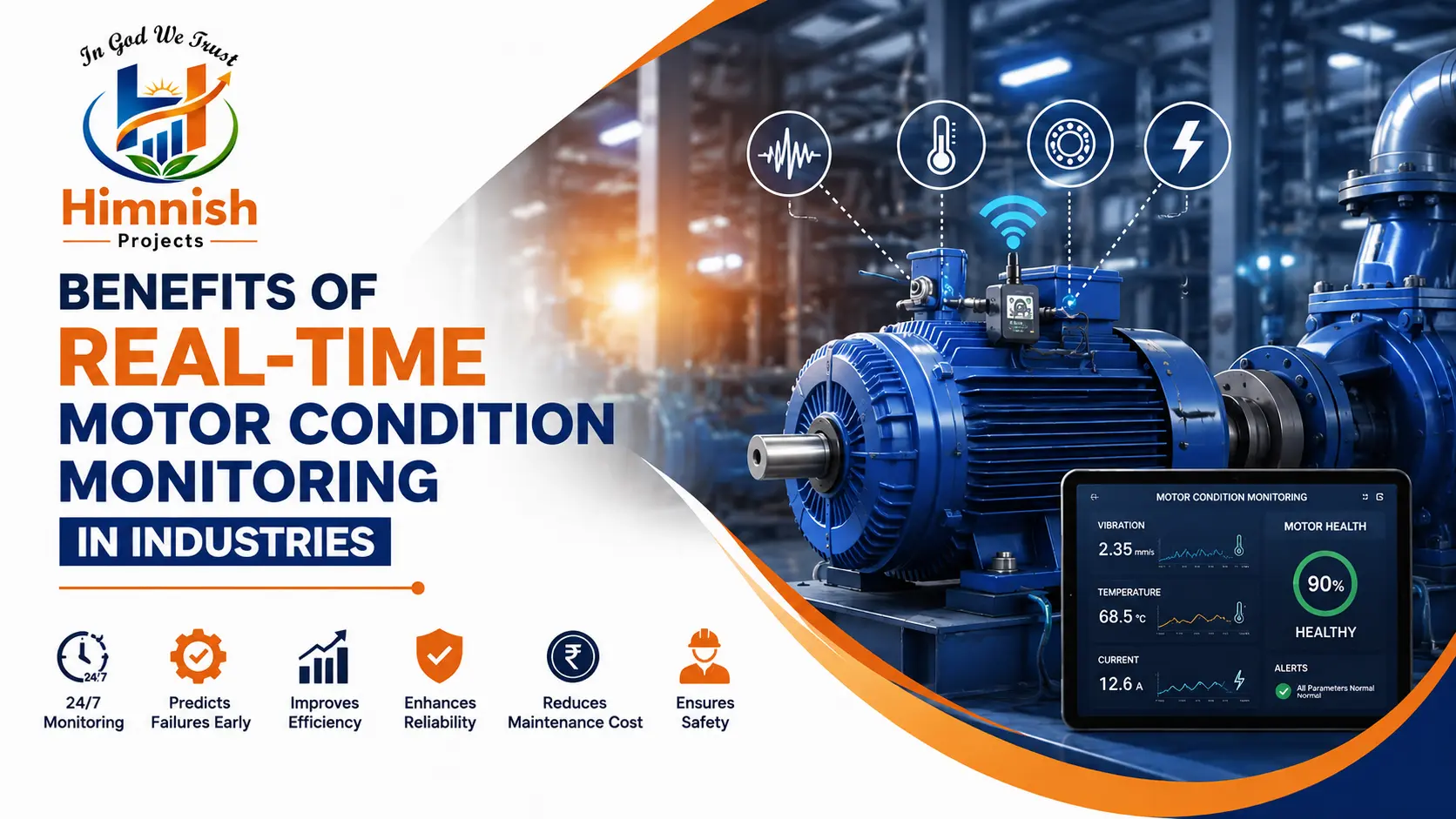
Real-time motor condition monitoring is the continuous monitoring of an electric motor’s operating condition using smart sensors and digital monitoring systems. Important parameters such as vibration, temperature, current, voltage, speed, insulation condition, bearing health, and energy consumption are continuously measured and analyzed.
Unlike traditional maintenance methods that rely on periodic inspections, online condition monitoring provides live data while the motor is running. This allows maintenance engineers to identify developing faults before they become major failures.
Modern monitoring platforms can send instant alerts through SCADA systems, cloud dashboards, mobile applications, or industrial control systems, enabling faster decision-making and minimizing production interruptions.
How Does Online Condition Monitoring Work?
An online condition monitoring system continuously collects data from sensors installed on motors and other rotating equipment. These sensors monitor key performance parameters and transmit information to intelligent software for analysis.
The software compares current operating conditions with predefined limits and historical trends. If abnormal vibration, overheating, bearing wear, shaft misalignment, electrical imbalance, or excessive load is detected, the system immediately generates alerts for maintenance personnel.
Instead of relying on scheduled maintenance, industries can perform maintenance only when required, significantly improving equipment availability and reducing unnecessary servicing.
Benefits of Condition Monitoring
The benefits of condition monitoring extend far beyond detecting equipment faults. Modern industries use these systems to improve reliability, reduce operational costs, and maximize asset life.
1. Prevents Unexpected Motor Failures
One of the biggest advantages of real time condition monitoring is early fault detection. Small issues such as bearing wear, vibration imbalance, or insulation deterioration can be identified before they lead to complete motor failure.
This proactive approach allows maintenance teams to take corrective action during planned shutdowns rather than dealing with costly emergency repairs.
2. Reduces Unplanned Downtime
Unexpected equipment breakdowns can stop entire production lines. By continuously monitoring motor performance, condition monitoring systems help industries detect problems early and schedule maintenance before failures occur. Reduced downtime directly improves production efficiency and operational profitability.
3. Lowers Maintenance Costs
Traditional preventive maintenance often involves replacing components that are still in good condition. With online condition monitoring, maintenance becomes condition-based rather than time-based. This reduces unnecessary maintenance activities, minimizes spare part consumption, and lowers overall maintenance costs.
4. Extends Motor Life
Continuous monitoring ensures motors always operate within safe temperature, vibration, and electrical limits. Preventing excessive stress significantly increases motor lifespan while reducing replacement frequency. Longer equipment life results in better return on investment for industrial assets.
5. Improves Equipment Reliability
Reliable machinery is essential for continuous industrial production. Real-time monitoring helps maintain stable operating conditions, reducing unexpected failures and improving overall plant reliability. This is particularly important in industries where even a few minutes of downtime can result in significant financial losses.
6. Enhances Workplace Safety
Motor failures may lead to overheating, electrical faults, mechanical damage, or fire hazards. Continuous monitoring identifies these risks before they become dangerous. By preventing catastrophic failures, condition monitoring systems contribute to a safer working environment for employees.
7. Optimizes Energy Consumption
Industrial motors consume a significant portion of electrical energy in manufacturing plants. Monitoring current, voltage, load, and efficiency helps identify energy losses caused by overloaded motors, mechanical defects, or poor operating conditions. Optimized motor performance reduces electricity consumption and operating costs.
8. Supports Predictive Maintenance
One of the major advantages of condition monitoring is predictive maintenance. Instead of repairing equipment after failure or replacing parts at fixed intervals, predictive maintenance uses real-time data to determine the actual health of machinery. This approach improves maintenance planning while minimizing production disruptions.
9. Provides Remote Monitoring
Modern condition monitoring systems support cloud connectivity and remote access. Engineers can monitor motor health from control rooms, offices, or even remote locations using computers, tablets, or smartphones. Remote monitoring allows faster response to developing issues without requiring constant on-site inspections.
10. Supports Industry 4.0 and Smart Manufacturing
Smart factories rely on digital technologies for improved operational efficiency. Real time condition monitoring integrates seamlessly with PLC, SCADA, IoT platforms, and industrial automation systems. This enables centralized asset management, real-time analytics, automated reporting, and data-driven decision-making.
Industries That Benefit from Condition Monitoring Systems
Modern condition monitoring systems are widely used across various industrial sectors where motor reliability is critical.
Some major industries include:
- Power Generation Plants
- Railway & Metro Systems
- Steel & Metal Industries
- Cement Manufacturing Plants
- Oil & Gas Facilities
- Mining Operations
- Automotive Manufacturing
- Chemical Processing Industries
- Water Treatment Plants
- Pharmaceutical Manufacturing
- Paper & Pulp Industries
- Food Processing Plants
Key Parameters Monitored
An advanced online condition monitoring solution continuously measures several important machine health parameters, including:
- Motor Temperature
- Bearing Temperature
- Vibration Levels
- Current & Voltage
- Speed (RPM)
- Shaft Alignment
- Bearing Condition
- Energy Consumption
- Insulation Health
- Load Performance
Monitoring these parameters allows maintenance teams to detect abnormalities long before equipment failure occurs.
Why Choose Himnish Projects?
Himnish Projects specializes in advanced condition monitoring systems designed to improve equipment reliability and operational efficiency across various industries. Our intelligent monitoring solutions combine IoT technology, real-time analytics, advanced sensors, and industrial automation to provide accurate machine health diagnostics.
From online condition monitoring systems for motors and pumps to vibration monitoring, temperature monitoring, energy monitoring, and predictive maintenance solutions, we help industries reduce downtime, optimize maintenance schedules, and improve equipment performance.
Our experienced engineering team delivers customized solutions that integrate seamlessly with existing industrial control systems while ensuring reliable, long-term performance.
Conclusion
As industries continue to adopt digital technologies, real time condition monitoring has become an essential part of modern maintenance strategies. By continuously monitoring motor health, detecting faults early, and enabling predictive maintenance, these intelligent systems significantly improve equipment reliability, reduce maintenance costs, and prevent costly production downtime.
The numerous benefits of condition monitoring make it one of the most valuable investments for manufacturing facilities aiming to improve operational efficiency and equipment lifespan. From reducing unexpected failures to supporting Industry 4.0 initiatives, the advantages of condition monitoring extend across every aspect of industrial operations.
At Himnish Projects, we provide advanced condition monitoring systems that help industries achieve smarter maintenance, improved productivity, and long-term operational excellence through reliable online condition monitoring solutions.