In today’s highly competitive industrial environment, machinery reliability is directly linked to productivity, operational efficiency, and profitability. Whether it’s a manufacturing plant, power station, mining operation, or oil and gas facility, unexpected equipment failures can lead to expensive downtime, production losses, and safety risks.
One of the most effective ways to prevent these issues is through vibration monitoring. By continuously tracking machine vibrations, industries can identify early warning signs of mechanical problems before they turn into major failures. This proactive approach not only extends equipment life but also reduces maintenance costs and improves overall plant performance.
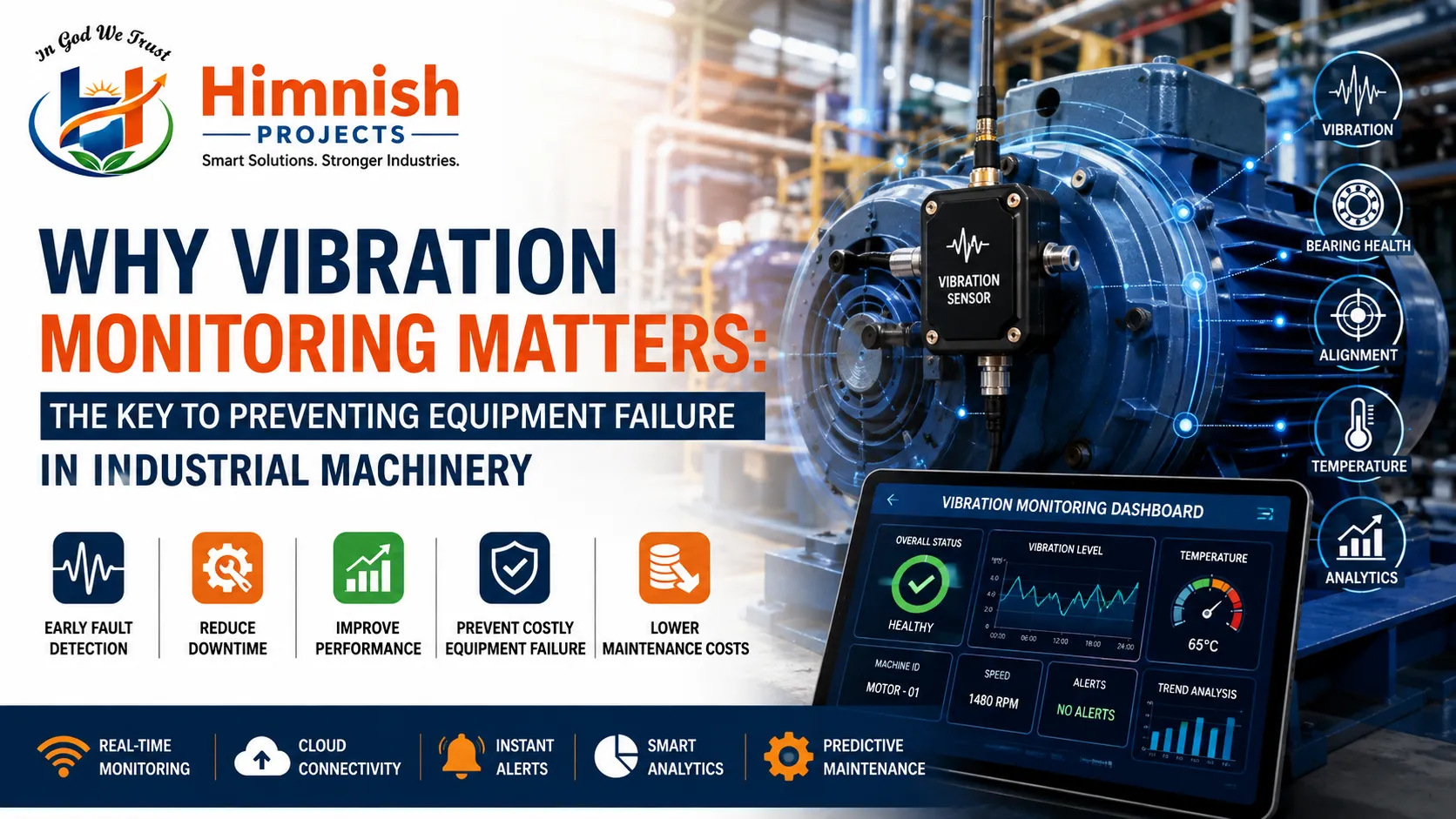
In this blog, we’ll explore Why Vibration Monitoring Matters: The Key to Preventing Equipment Failure in Industrial Machinery, its working principle, benefits, applications, and why businesses are increasingly investing in smart vibration monitoring solutions.
What is Vibration Monitoring?
Vibration monitoring is the process of measuring and analyzing the vibration levels of industrial machinery to determine its operating condition. Every rotating machine naturally produces vibrations during operation. However, when vibration levels increase beyond normal limits, it often indicates mechanical issues such as bearing wear, shaft misalignment, imbalance, looseness, or gear damage.
Using advanced sensors and monitoring systems, industries can continuously observe machine health and detect abnormalities before they result in unexpected equipment failure. Instead of relying on scheduled maintenance or reacting after a breakdown occurs, vibration monitoring enables maintenance teams to make informed, data-driven decisions.
Also Read: What is IoT Predictive Maintenance? A Complete Guide for Modern Industries
Why Vibration Monitoring Matters in Industrial Machinery
Industrial machinery operates under demanding conditions every day. Even minor mechanical defects can quickly develop into serious failures if they go unnoticed. Here’s why vibration monitoring has become an essential part of modern industrial maintenance:
Early Fault Detection
Abnormal vibration is often the first sign of equipment deterioration. Monitoring systems detect these changes early, allowing maintenance teams to resolve issues before they become critical.
Reduced Equipment Downtime
Unexpected machine failures can stop production for hours or even days. Continuous monitoring minimizes unplanned downtime by identifying problems before they cause breakdowns.
Improved Machine Reliability
Machines operating within acceptable vibration limits perform more efficiently and consistently, reducing the risk of sudden failures.
Lower Maintenance Costs
Instead of replacing components unnecessarily or waiting for expensive failures, businesses can perform maintenance only when required.
Common Causes of Excessive Machine Vibration
Understanding the causes of abnormal vibration helps industries take corrective action quickly.
Bearing Failure
Worn or damaged bearings are among the most common reasons for increased machine vibration.
Shaft Misalignment
Improper alignment between rotating shafts causes excessive vibration and accelerates equipment wear.
Rotor Imbalance
Uneven weight distribution in rotating components creates continuous vibration during operation.
Mechanical Looseness
Loose bolts, fasteners, or structural components reduce machine stability.
Gear Wear
Damaged gears generate irregular vibration patterns that indicate transmission problems.
Lubrication Issues
Insufficient or contaminated lubrication increases friction, leading to abnormal vibration and overheating.
How Vibration Monitoring Prevents Equipment Failure
One of the biggest advantages of vibration monitoring is its ability to detect hidden problems long before visible damage occurs.
The process typically includes:
Continuous Data Collection
Industrial vibration sensors continuously measure vibration levels from motors, pumps, compressors, turbines, conveyors, and other rotating equipment.
Real-Time Monitoring
Collected data is transmitted to monitoring software for instant analysis.
Intelligent Analysis
Advanced algorithms compare current vibration levels with historical operating data to identify unusual trends.
Automatic Alerts
If vibration exceeds safe operating limits, maintenance teams receive immediate notifications through dashboards, emails, or mobile applications.
Planned Maintenance
Maintenance activities are scheduled before equipment fails, reducing repair costs and avoiding emergency shutdowns.
This predictive approach significantly improves operational efficiency.
Benefits of Vibration Monitoring
Increased Equipment Lifespan
Continuous monitoring prevents severe mechanical damage, helping machines operate efficiently for longer periods.
Improved Workplace Safety
Equipment failures can create dangerous situations for workers. Early fault detection reduces the likelihood of accidents caused by sudden machine breakdowns.
Higher Production Efficiency
Reliable equipment means uninterrupted production and improved operational performance.
Lower Operating Costs
Preventing catastrophic failures reduces repair expenses, spare part consumption, and emergency maintenance costs.
Better Energy Efficiency
Machines suffering from mechanical faults often consume more power. Detecting these problems early improves energy efficiency and lowers electricity costs.
Improved Maintenance Planning
Maintenance teams can prioritize repairs based on actual equipment condition instead of following fixed maintenance schedules.
Better Return on Investment
Extending machine life while reducing maintenance expenses results in a higher return on industrial equipment investments.
Industries That Benefit from Vibration Monitoring
Today, vibration monitoring is widely used across various industries where rotating machinery plays a critical role.
Manufacturing Plants
Monitor motors, conveyors, compressors, pumps, and CNC machines.
Power Generation
Track turbines, generators, cooling systems, and transformers.
Oil & Gas
Monitor compressors, drilling equipment, pumps, and pipelines.
Cement Industry
Analyze crushers, rotary kilns, mills, and conveyor systems.
Mining Operations
Ensure the health of heavy-duty machinery operating in harsh environments.
Water Treatment Plants
Monitor pumps, blowers, filtration systems, and motors.
Food Processing
Maintain uninterrupted production while ensuring equipment reliability.
HVAC Systems
Track chillers, cooling towers, air handling units, and compressors.
Traditional Maintenance vs Vibration Monitoring
| Traditional Maintenance | Vibration Monitoring |
|---|---|
| Reactive repairs | Predictive maintenance |
| Fixed inspection schedules | Continuous monitoring |
| Higher maintenance costs | Optimized maintenance expenses |
| Unexpected breakdowns | Early fault detection |
| Manual inspections | Automated monitoring |
| Limited equipment insights | Real-time machine health data |
This comparison clearly demonstrates why vibration monitoring has become a preferred maintenance strategy for modern industries.
The Role of IoT in Vibration Monitoring
With the rise of Industry 4.0, vibration monitoring has become smarter through Internet of Things (IoT) technology.
IoT-enabled vibration monitoring systems provide:
- Remote equipment monitoring
- Real-time dashboards
- Cloud data storage
- Instant fault notifications
- AI-powered fault prediction
- Historical trend analysis
- Predictive maintenance recommendations
These smart capabilities allow industries to monitor equipment from anywhere while improving maintenance efficiency.
Best Practices for Effective Vibration Monitoring
To maximize the benefits of vibration monitoring, industries should follow these best practices:
- Install high-quality vibration sensors on critical equipment.
- Monitor vibration trends regularly rather than relying on one-time readings.
- Integrate vibration monitoring with IoT-based predictive maintenance systems.
- Set appropriate alarm thresholds for different machine types.
- Analyze historical vibration data to identify recurring issues.
- Train maintenance personnel to interpret vibration reports accurately.
- Perform corrective maintenance immediately after receiving fault alerts.
Why Choose Himnish Projects?
When implementing an advanced vibration monitoring solution, selecting the right technology partner is essential. Himnish Projects specializes in intelligent industrial automation and condition monitoring solutions that help businesses improve equipment reliability, reduce downtime, and optimize maintenance strategies.
Why industries trust Himnish Projects:
- Advanced vibration monitoring solutions
- IoT-enabled condition monitoring systems
- Real-time equipment health analysis
- Predictive maintenance technologies
- Customized industrial automation solutions
- User-friendly dashboards and reporting
- Reliable sensor integration
- Scalable monitoring systems
- Expert installation and technical support
- Dedicated after-sales service
By combining innovative technology with industry expertise, Himnish Projects helps businesses transition from reactive maintenance to smart, predictive maintenance, ensuring maximum equipment availability and operational efficiency.
Conclusion
Understanding Why Vibration Monitoring Matters: The Key to Preventing Equipment Failure in Industrial Machinery is essential for organizations looking to improve productivity, reduce maintenance costs, and enhance equipment reliability. Rather than waiting for machinery to fail, vibration monitoring enables industries to identify problems early, schedule maintenance efficiently, and avoid costly production disruptions.
With the integration of IoT, AI, and predictive analytics, vibration monitoring has evolved into a powerful tool for modern industrial maintenance. Investing in a reliable vibration monitoring solution from Himnish Projects allows businesses to protect valuable assets, improve workplace safety, and achieve long-term operational excellence.
Frequently Asked Questions (FAQs)
1. What is vibration monitoring in industrial machinery?
Vibration monitoring is the process of measuring and analyzing machine vibrations to detect early signs of mechanical problems and prevent equipment failure.
2. Why is vibration monitoring important?
It helps identify issues such as bearing wear, imbalance, shaft misalignment, and looseness before they cause costly equipment breakdowns.
3. Which industries use vibration monitoring?
Manufacturing, power generation, oil and gas, mining, cement, water treatment, food processing, and HVAC industries commonly use vibration monitoring systems.
4. Can vibration monitoring reduce maintenance costs?
Yes. By identifying problems early and enabling predictive maintenance, vibration monitoring significantly reduces repair costs, downtime, and unnecessary maintenance activities.
5. Why choose Himnish Projects for vibration monitoring solutions?
Himnish Projects provides advanced IoT-enabled vibration monitoring and condition monitoring solutions that deliver real-time machine health insights, predictive maintenance capabilities, customized industrial automation, and expert technical support to help industries maximize equipment performance and operational efficiency.