Industrial operations depend on the reliable performance of machinery, equipment, and production systems. Even a minor equipment failure can cause unexpected downtime, increase maintenance costs, and affect overall productivity. Traditional inspection methods often require technicians to visit equipment locations and check operating conditions manually. Industrial remote monitoring offers a smarter approach by allowing businesses to track equipment performance, identify potential issues, and access operational data from a remote location.
For modern industries, remote monitoring is becoming an important part of maintenance planning, process control, and operational efficiency. By combining sensors, communication technologies, and monitoring software, businesses can make informed decisions and respond to equipment problems more quickly.
In this blog, we will explore how industrial remote monitoring works, its major benefits, applications, and practical use cases.
What Is Industrial Remote Monitoring?
Industrial remote monitoring is the process of observing and tracking industrial equipment, machinery, and operational parameters from a location separate from the equipment itself. It enables operators and maintenance teams to access real-time or periodically updated information without being physically present at the industrial site.
A remote monitoring system can collect information such as temperature, pressure, vibration, energy consumption, flow rate, and equipment operating status. This data helps businesses understand how their machinery is performing and whether it is operating within the desired limits.
Unlike manual inspection, industrial monitoring through remote systems can provide continuous visibility into equipment conditions. Depending on the system design, users may also receive alerts when a parameter exceeds a predefined threshold.
For industries managing multiple machines, production lines, or geographically distributed facilities, remote monitoring of equipment can improve visibility and support faster maintenance decisions.
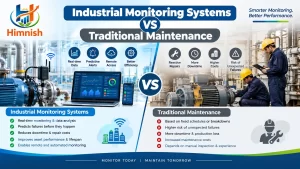
Also Read: Industrial Monitoring Systems vs Traditional Maintenance: Key Differences, Benefits and Applications
How Does an Industrial Remote Monitoring System Work?
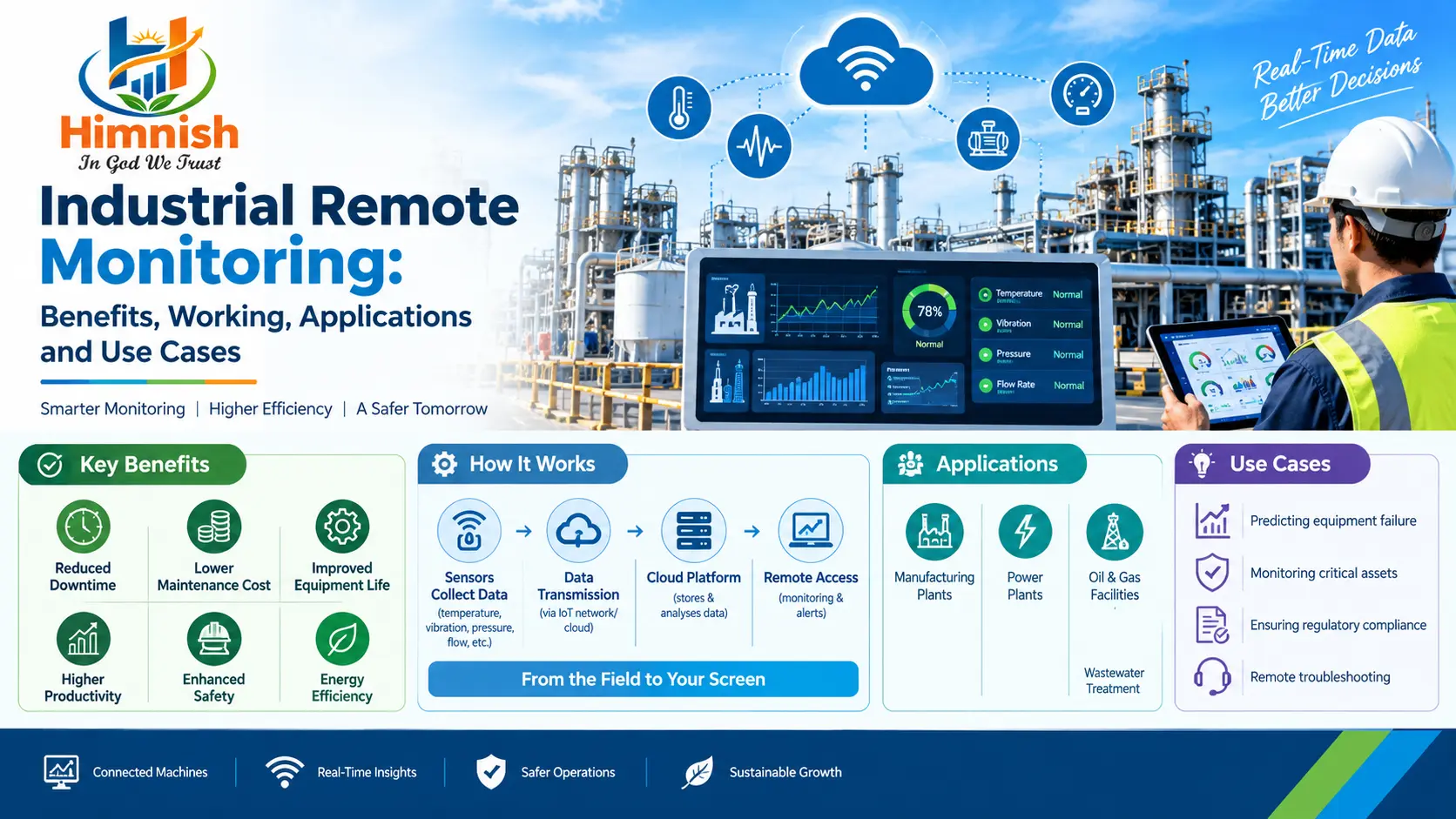
An industrial remote monitoring system works by collecting equipment data, transmitting it through a communication network, and displaying the information on a monitoring platform. Although the exact setup depends on the application, most systems follow a similar process.
1. Data Collection Through Sensors
Sensors are installed on machinery or connected to existing industrial instruments to measure specific operating parameters. These may include temperature, pressure, vibration, humidity, flow, and electrical current.
The selection of sensors depends on the equipment being monitored and the type of information required.
2. Data Transmission
Collected data is transmitted to a monitoring platform through suitable communication technologies. Depending on the site requirements, the system may use industrial Ethernet, Wi-Fi, cellular connectivity, or other industrial communication protocols.
Gateways and controllers can help collect data from multiple devices and transfer it securely to the next stage.
3. Data Processing and Analysis
The monitoring software processes the incoming information and presents it in an understandable format. Dashboards, graphs, historical records, and status indicators help operators identify unusual changes and evaluate equipment performance.
Advanced systems may also use analytics or machine learning to identify patterns associated with developing equipment faults.
4. Alerts and Notifications
When the system detects an abnormal condition, it can generate an alert based on predefined rules. For example, a warning may be triggered if a motor overheats or a pump develops excessive vibration.
Depending on the configuration, notifications may be sent to operators or maintenance personnel through the available communication channels.
5. Remote Access and Corrective Action
Authorized users can access monitoring information through computers or mobile devices, depending on the platform. They can review equipment status, assess warnings, and coordinate maintenance activities.
Remote monitoring does not automatically mean remote control. Any remote operation or control function requires appropriate authorization, safeguards, and system integration.
Key Benefits of Industrial Remote Monitoring
Industrial remote monitoring provides several advantages for businesses that depend on reliable equipment and consistent production.
1. Reduced Equipment Downtime
Unexpected machinery failures can interrupt production and delay deliveries. Continuous monitoring helps identify abnormal operating conditions before they develop into more serious problems.
Early warnings allow maintenance teams to investigate issues and schedule corrective work when appropriate, reducing the risk of avoidable interruptions.
2. Improved Maintenance Planning
Traditional maintenance often depends on fixed schedules or equipment failure reports. Remote monitoring provides additional information about actual operating conditions.
Maintenance teams can use this data to prioritize inspections, plan servicing, and allocate resources more effectively. This approach supports condition-based maintenance and, where suitable data and analytics are available, predictive maintenance.
3. Better Equipment Performance
Monitoring parameters such as vibration, temperature, pressure, and energy consumption helps operators understand how equipment performs under different operating conditions.
Identifying unusual trends can reveal inefficient operation, developing faults, or opportunities to improve equipment settings. These insights support more consistent production and better asset utilization.
4. Lower Operating and Maintenance Costs
Equipment failures may lead to expensive repairs, production losses, and emergency maintenance. Remote monitoring can help reduce these risks by providing earlier visibility into developing problems.
It can also reduce the need for routine physical visits when remote data is sufficient for an initial assessment. However, physical inspections and servicing remain necessary wherever equipment safety or maintenance procedures require them.
5. Improved Workplace Safety
Certain industrial environments involve high temperatures, hazardous substances, high-pressure systems, or difficult-to-access machinery.
Remote monitoring allows operators to observe selected operating parameters without approaching the equipment for every routine check. This can reduce unnecessary exposure to hazardous areas, although it does not replace required safety inspections or protective procedures.
6. Centralized Monitoring and Reporting
Businesses operating multiple production lines or industrial facilities can benefit from a centralized monitoring dashboard.
Depending on system integration, authorized teams can compare equipment status, review historical trends, and identify recurring operational problems across different locations.
Common Applications of Industrial Remote Monitoring
Industrial remote monitoring can be applied across various sectors. The parameters and technologies used depend on the equipment, operating environment, and business objectives.
Manufacturing and Production Facilities
Manufacturing plants can monitor motors, pumps, compressors, conveyor systems, and production machinery. Equipment status and operating data help teams identify abnormal conditions and maintain production continuity.
Power Generation and Energy Systems
Power facilities can monitor selected parameters associated with generators, transformers, electrical panels, and auxiliary equipment. Remote visibility helps operators identify deviations and coordinate inspections.
Water and Wastewater Treatment Plants
Water treatment facilities can monitor pump operation, tank levels, flow rates, pressure, and selected water-quality parameters. Remote access is especially useful when equipment is distributed across multiple locations.
Oil, Gas, and Process Industries
Industrial facilities in the oil, gas, and chemical sectors can use remote monitoring to track suitable pressure, temperature, flow, and equipment-condition measurements. System design must account for process hazards, applicable regulations, and site-specific safety requirements.
Warehousing and Material Handling
Warehouses and industrial logistics facilities can monitor conveyor motors, automated handling equipment, and selected mechanical systems. Performance information helps maintenance teams identify interruptions and coordinate repairs.
HVAC and Industrial Utilities
Remote monitoring can support the observation of chillers, pumps, air compressors, cooling systems, and ventilation equipment. Tracking energy use and operating parameters can help identify inefficiencies and potential maintenance requirements.
Industrial Equipment Monitoring: Practical Use Cases
Understanding real-world applications makes it easier to see how remote monitoring supports daily industrial operations.
Use Case 1: Monitoring Industrial Motors
Temperature, vibration, and electrical current measurements can help identify unusual motor behaviour. An alert may prompt the maintenance team to inspect bearings, alignment, cooling, or electrical connections before a fault causes a major interruption.
Use Case 2: Remote Monitoring of Pumps
Industrial pumps are widely used in water treatment, manufacturing, and process applications. Monitoring pressure, flow, motor current, and vibration can help detect abnormal operating conditions, such as restricted flow or possible mechanical problems.
Use Case 3: Monitoring Compressed Air Systems
Compressed air systems can be monitored for operating pressure, energy consumption, and compressor status. Depending on the instrumentation, this information can help identify pressure fluctuations, inefficient operation, and possible air leakage.
Use Case 4: Monitoring Equipment Across Multiple Sites
Businesses with several plants or remote installations can use a centralized platform to review equipment status. This improves coordination between maintenance teams and helps management prioritize issues according to their operational impact.
These examples demonstrate how monitoring industrie operations through connected systems can improve equipment visibility and support data-driven maintenance decisions.
Challenges to Consider Before Implementing Remote Monitoring
Although remote monitoring offers important benefits, successful implementation requires careful planning.
First, businesses should identify the equipment and parameters that need monitoring. Installing unnecessary sensors can increase project costs without delivering meaningful operational value.
Second, reliable connectivity is essential. Remote or industrial locations may require gateways, alternative communication options, or local data storage to manage network interruptions.
Third, cybersecurity must be considered from the beginning. Systems should use appropriate access controls, secure communication, regular updates, and network segmentation where suitable. Remote control capabilities require additional safeguards.
Finally, data accuracy and system integration are important. Sensors should be selected and maintained appropriately, while the monitoring platform should be compatible with relevant equipment and existing industrial systems.
How to Choose the Right Industrial Remote Monitoring Solution
Before selecting a solution, businesses should evaluate their operational requirements rather than focusing only on technology features.
Consider the following factors:
- Equipment compatibility: Confirm that the system supports the machinery, sensors, and industrial protocols in use.
- Monitoring requirements: Identify the parameters, reporting frequency, and alert conditions needed for each application.
- Scalability: Choose a solution that can accommodate additional machines or facilities as requirements grow.
- Data security: Evaluate user permissions, secure connectivity, and access management.
- Integration: Check whether the system can work with existing PLCs, SCADA platforms, maintenance software, or other operational tools.
- Support and maintenance: Consider installation assistance, system configuration, technical support, and future upgrades.
A clearly defined monitoring strategy helps businesses select a solution that fits their operational goals and long-term requirements.
Conclusion
Industrial remote monitoring helps businesses improve equipment visibility, strengthen maintenance planning, and make better use of operational data. By combining sensors, communication networks, and monitoring software, organizations can identify abnormal conditions earlier and respond to potential problems more effectively.
From manufacturing plants and water treatment facilities to energy systems and industrial utilities, remote monitoring of equipment supports more informed operational decisions. Its effectiveness, however, depends on selecting suitable technologies, maintaining accurate data, and implementing appropriate safety and cybersecurity measures.
For businesses seeking to improve industrial monitoring and operational reliability, Himnish Projects can be a relevant starting point for exploring industrial monitoring and testing-related solutions suited to their requirements.
The right approach is to identify the equipment that matters most, define measurable monitoring objectives, and implement a system that delivers useful information to the people responsible for keeping operations running efficiently.