In today’s fast-paced industrial world, unexpected equipment failures can lead to costly downtime, reduced productivity, and expensive repairs. Traditional maintenance methods often rely on scheduled inspections or reactive repairs, which may not identify problems before they become critical. This is where an IoT-Based Condition Monitoring System plays a transformative role.
An IoT-based condition monitoring system continuously monitors the health and performance of industrial equipment using smart sensors, cloud computing, and real-time data analytics. It enables industries to detect potential issues early, optimize maintenance schedules, and improve operational efficiency.
In this complete guide, we’ll explain What is an IoT-Based Condition Monitoring System, how it works, its key components, benefits, applications, and why businesses across industries are adopting this advanced technology.
What is an IoT-Based Condition Monitoring System?
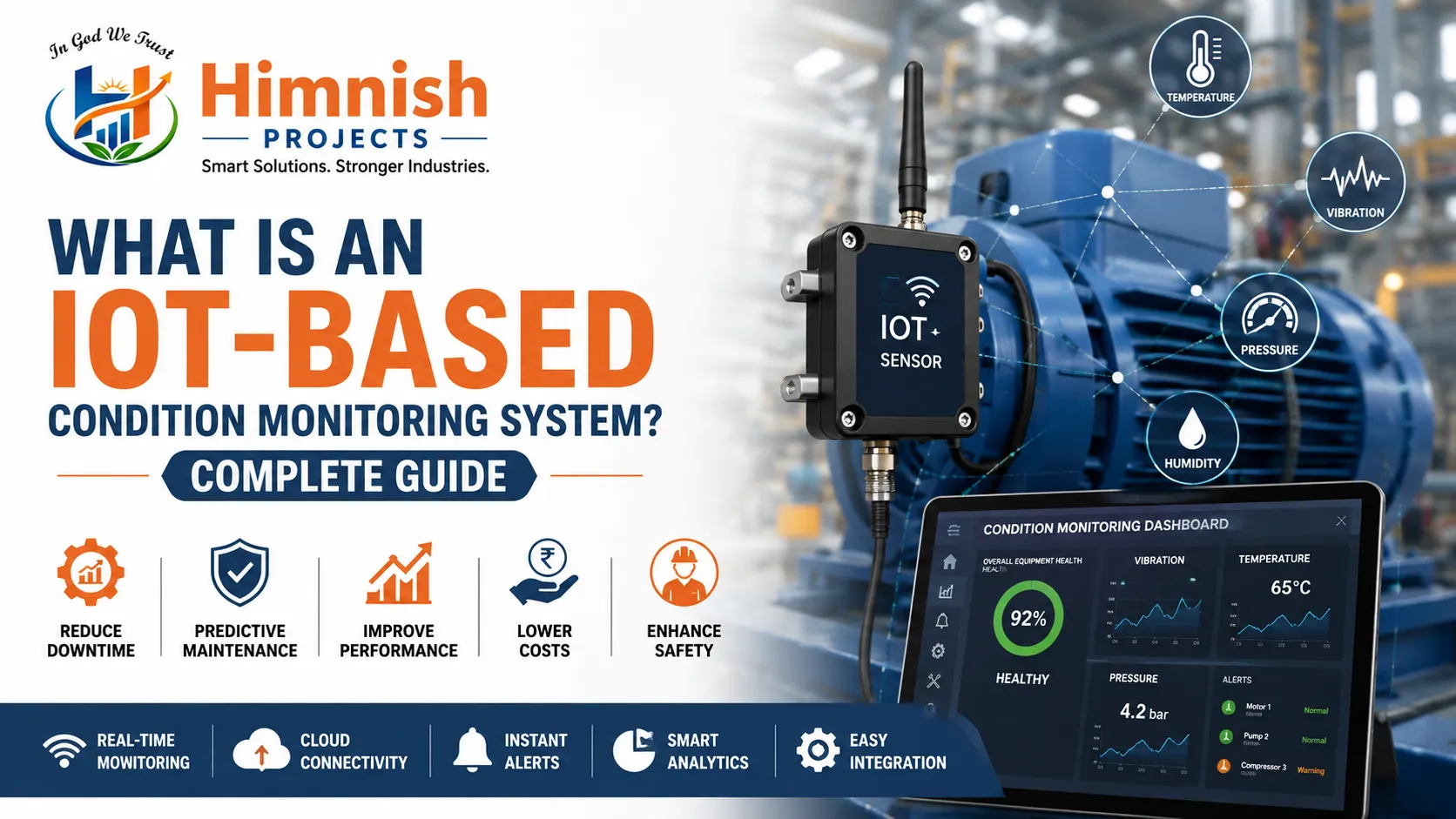
An IoT-Based Condition Monitoring System is a smart industrial monitoring solution that uses Internet of Things (IoT) technology to collect, transmit, analyze, and monitor equipment performance in real time.
The system uses sensors installed on machines to measure important operating parameters such as:
- Temperature
- Vibration
- Pressure
- Humidity
- Noise
- Voltage
- Current
- Speed
- Oil Quality
- Energy Consumption
The collected data is transmitted to cloud platforms or local servers, where intelligent software analyzes equipment conditions and alerts operators if abnormal behavior is detected. Instead of waiting for a machine to fail, industries can predict maintenance needs before breakdowns occur.
How Does an IoT-Based Condition Monitoring System Work?
The working process involves several intelligent technologies working together.
1. Data Collection
Smart IoT sensors continuously capture operational data from machines.
Examples include:
- Vibration sensors
- Temperature sensors
- Pressure sensors
- Current sensors
- Humidity sensors
These sensors operate 24/7 without interrupting production.
2. Data Transmission
The collected data is securely transmitted through:
- Wi-Fi
- Ethernet
- GSM
- LoRaWAN
- NB-IoT
- Bluetooth
This allows remote monitoring from anywhere.
3. Data Analysis
Cloud-based software or edge computing devices analyze the collected data using advanced algorithms. The system compares real-time values with predefined thresholds to detect unusual machine behavior.
4. Alert Generation
If abnormal conditions are detected, the system immediately sends notifications through:
- Mobile Apps
- SMS
- Dashboard Alerts
- SCADA Systems
This allows maintenance teams to respond quickly.
5. Predictive Maintenance
Historical data and AI-driven analytics help predict component failures before they occur, reducing costly downtime.
Key Components of an IoT-Based Condition Monitoring System
A complete condition monitoring solution generally includes:
Smart Sensors
Sensors collect accurate machine health data in real time.
IoT Gateway
Acts as a communication bridge between sensors and cloud platforms.
Cloud Platform
Stores and processes large amounts of operational data securely.
Analytics Software
Converts raw data into meaningful insights using machine learning and predictive analytics.
Dashboard
Provides users with easy-to-understand reports, trends, alerts, and machine status.
Benefits of an IoT-Based Condition Monitoring System
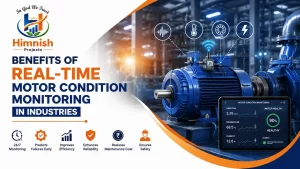
Read more about Benefits of Real-Time Motor Condition Monitoring in Industries
Parameters Monitored by IoT Systems
An IoT-Based Condition Monitoring System can monitor numerous operational parameters.
Common examples include:
- Temperature
- Bearing vibration
- Motor current
- Voltage
- Pressure
- Flow rate
- Oil quality
- Lubrication condition
- Shaft alignment
- RPM
- Energy consumption
- Humidity
- Acoustic emissions
These parameters help determine overall equipment health.
Applications of IoT-Based Condition Monitoring Systems
Today, IoT monitoring solutions are used across numerous industries.
Manufacturing Plants
Monitor motors, compressors, conveyors, pumps, and production equipment.
Power Plants
Track turbines, transformers, generators, and switchgear.
Oil & Gas
Monitor pipelines, pumps, compressors, and drilling equipment.
Water Treatment Plants
Ensure efficient operation of pumps, blowers, and filtration systems.
Mining Industry
Monitor heavy machinery operating in harsh environments.
Cement Industry
Track crushers, mills, conveyors, and rotating equipment.
Food Processing
Maintain production quality while preventing equipment failures.
HVAC Systems
Monitor chillers, cooling towers, and ventilation systems.
IoT-Based Monitoring vs Traditional Maintenance
| Traditional Maintenance | IoT-Based Condition Monitoring |
|---|---|
| Periodic inspections | Continuous real-time monitoring |
| Reactive repairs | Predictive maintenance |
| Higher downtime | Minimal downtime |
| Manual data collection | Automated monitoring |
| Higher maintenance cost | Optimized maintenance expenses |
| Limited equipment visibility | Complete operational insights |
The comparison clearly shows why industries are moving toward IoT-enabled maintenance strategies.
Factors to Consider Before Choosing a Condition Monitoring System
Selecting the right monitoring solution requires evaluating several important factors.
Sensor Accuracy
Choose industrial-grade sensors that provide reliable and precise measurements.
Scalability
Ensure the system can support future expansion.
Cloud Security
Data security is essential for protecting critical industrial information.
Real-Time Alerts
Immediate notifications help prevent serious equipment failures.
Easy Integration
The solution should integrate seamlessly with existing PLC, SCADA, ERP, or MES systems.
User-Friendly Dashboard
Simple dashboards improve decision-making and operational efficiency.
Future of IoT-Based Condition Monitoring
The future of industrial maintenance is becoming smarter through technologies such as:
- Artificial Intelligence (AI)
- Machine Learning
- Digital Twins
- Edge Computing
- Predictive Analytics
- 5G Connectivity
These technologies will make equipment monitoring even more accurate, enabling industries to reduce maintenance costs while improving reliability and productivity.
Why Choose Himnish Projects?
When implementing an IoT-Based Condition Monitoring System, choosing an experienced technology partner is crucial for long-term success.
Himnish Projects provides intelligent industrial automation and condition monitoring solutions designed to improve equipment reliability, reduce downtime, and increase operational efficiency. The company delivers customized IoT-based monitoring systems tailored to the specific requirements of manufacturing plants, process industries, utilities, and infrastructure projects.
Why industries trust Himnish Projects:
- Advanced IoT-enabled monitoring solutions
- Real-time equipment health monitoring
- Predictive maintenance capabilities
- Reliable sensor integration
- Customized automation solutions
- User-friendly dashboards and reporting
- Scalable systems for future expansion
- Expert technical support and implementation
- Focus on improving productivity and reducing operational costs
With a commitment to innovation and industrial excellence, Himnish Projects helps businesses transition from reactive maintenance to smart, data-driven asset management.
Conclusion
Understanding What is an IoT-Based Condition Monitoring System is essential for industries aiming to improve reliability, reduce downtime, and maximize equipment performance. By combining smart sensors, cloud connectivity, real-time analytics, and predictive maintenance, these systems enable organizations to detect issues before they become costly failures.
As industries continue to embrace Industry 4.0 and digital transformation, investing in an IoT-based condition monitoring solution is no longer a luxury—it’s a strategic necessity. Partnering with Himnish Projects ensures access to advanced monitoring technologies, expert implementation, and reliable support, helping your business achieve safer operations, higher productivity, and long-term cost savings.
Frequently Asked Questions (FAQs)
1. What is an IoT-Based Condition Monitoring System?
It is a smart monitoring solution that uses IoT sensors, cloud technology, and data analytics to continuously monitor machine health and predict equipment failures before they occur.
2. What are the benefits of an IoT-Based Condition Monitoring System?
It helps reduce downtime, lower maintenance costs, improve equipment lifespan, enhance safety, increase energy efficiency, and support predictive maintenance.
3. Which industries use IoT-Based Condition Monitoring Systems?
These systems are widely used in manufacturing, power plants, oil & gas, mining, water treatment, cement, food processing, HVAC, and other industrial sectors.
4. What parameters can an IoT-Based Condition Monitoring System monitor?
It can monitor vibration, temperature, pressure, voltage, current, humidity, oil quality, RPM, energy consumption, flow rate, and several other machine health indicators.
5. Why choose Himnish Projects for IoT-Based Condition Monitoring?
Himnish Projects delivers customized, scalable, and reliable IoT-based monitoring solutions with real-time insights, predictive maintenance features, expert support, and seamless integration to help industries improve operational efficiency and reduce maintenance costs.