Oxygen is one of the most essential gases used across numerous industries. From hospitals and pharmaceutical manufacturing to metal fabrication, glass production, water treatment, and chemical processing, a reliable oxygen supply is critical for maintaining productivity and ensuring operational safety. Traditionally, industries depended on oxygen cylinders or liquid oxygen tanks, but these options often involve recurring transportation costs, storage challenges, and supply delays.
To overcome these limitations, many industries are now installing PSA Oxygen Generation Plants that produce high-purity oxygen directly at the point of use. These systems are cost-effective, energy-efficient, and capable of delivering a continuous oxygen supply whenever required.
In this blog, we’ll explain the PSA Oxygen Generation Plant: Working Principle & Applications, discuss how a PSA oxygen generator functions, its major components, benefits, and why it has become the preferred oxygen production solution for modern industries.
What is a PSA Oxygen Generation Plant?
A PSA Oxygen Generation Plant is an on-site oxygen production system that separates oxygen from compressed atmospheric air using Pressure Swing Adsorption (PSA) technology. Instead of relying on external oxygen suppliers, the plant continuously generates oxygen with the desired purity whenever it is required.
A PSA oxygen generator uses specially designed molecular sieve materials that selectively adsorb nitrogen while allowing oxygen to pass through. The result is a continuous flow of oxygen suitable for various industrial and medical applications.
Because the system produces oxygen on demand, businesses can reduce dependency on cylinders, improve operational efficiency, and significantly lower long-term operating costs.
Also Read: Railway Traction Motors: Types, Working Principle and Key Components
Understanding the PSA Oxygen Generator Working Principle
To fully understand the efficiency of this technology, it’s important to know the PSA oxygen generator working principle.
Atmospheric air contains approximately 78% nitrogen, 21% oxygen, and small amounts of argon, carbon dioxide, and other gases. A PSA system separates oxygen from this mixture using pressure changes and adsorption technology.
The process begins with an air compressor that compresses atmospheric air before sending it through filters that remove dust, oil, moisture, and other impurities. The clean compressed air then enters adsorption vessels filled with Zeolite Molecular Sieves (ZMS).
These molecular sieves have a unique ability to adsorb nitrogen molecules under pressure while allowing oxygen molecules to pass through. As nitrogen becomes trapped inside the adsorbent material, oxygen continues to flow toward the storage tank.
Once the molecular sieve reaches its adsorption capacity, the system automatically reduces pressure inside the vessel. This releases the trapped nitrogen into the atmosphere and regenerates the adsorbent material for the next production cycle.
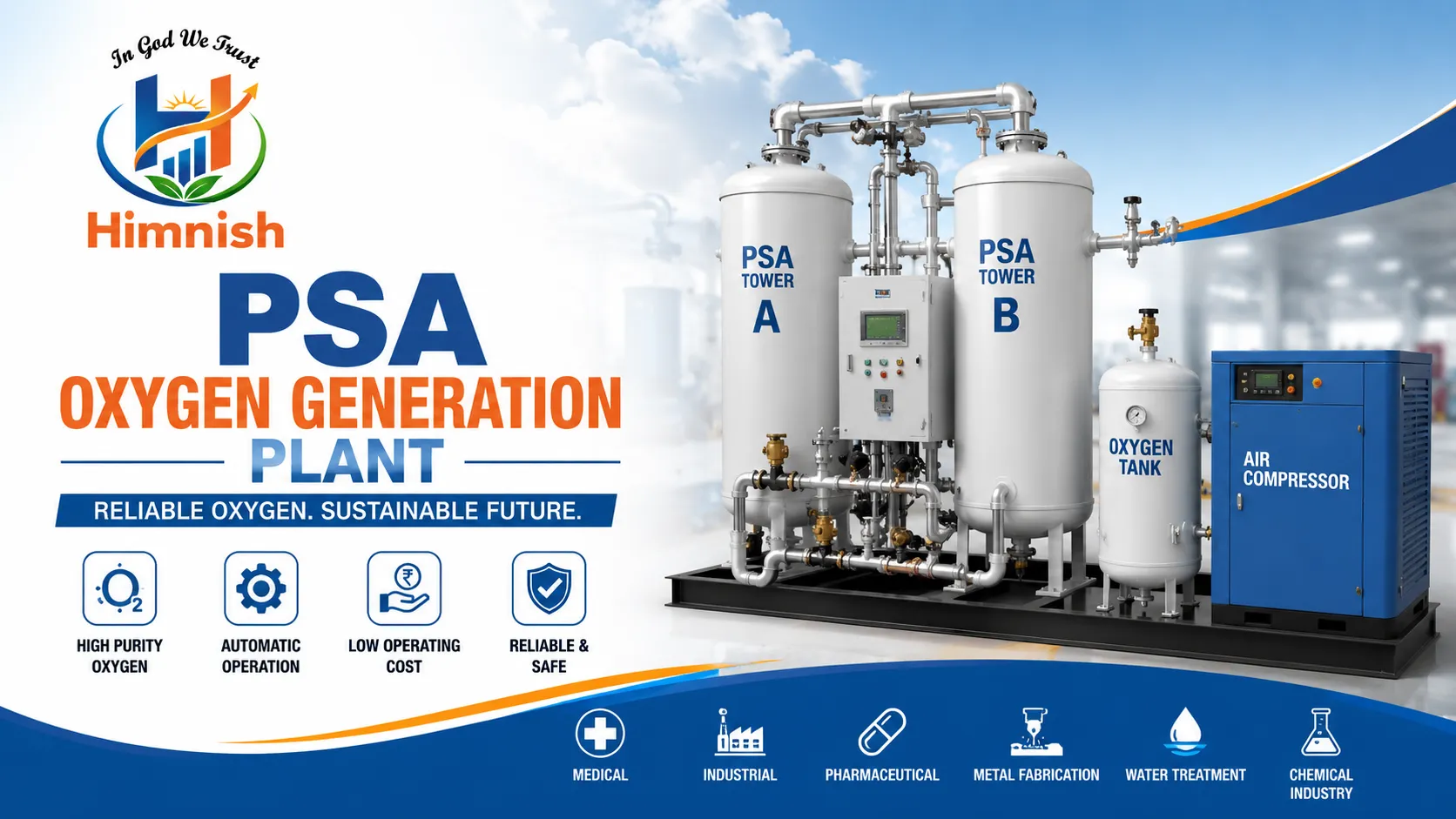
Two adsorption towers operate alternately, ensuring uninterrupted oxygen production throughout the operation.
This continuous adsorption and regeneration cycle forms the foundation of the PSA oxygen generator working principle, making the technology highly reliable for industries requiring continuous oxygen availability.
Main Components of a PSA Oxygen Generator
Every oxygen PSA generator consists of several essential components that work together to ensure efficient oxygen production.
The air compressor supplies compressed atmospheric air to the system. Air filters and dryers remove contaminants before the air enters the adsorption towers, protecting the molecular sieve and improving system performance.
The adsorption vessels contain Zeolite Molecular Sieves, which are responsible for separating nitrogen from oxygen. An oxygen storage tank maintains a steady oxygen supply even during fluctuations in demand, while an intelligent PLC control panel automates the complete operation of the plant.
Pressure regulators, valves, sensors, and monitoring systems continuously maintain oxygen purity, pressure, and flow rate, ensuring reliable performance with minimal operator intervention.
Why Industries Prefer Oxygen Generator PSA Systems
Industries are increasingly replacing conventional oxygen cylinders with oxygen generator PSA systems because they provide greater operational flexibility and lower running costs.
Since oxygen is produced directly at the facility, businesses no longer have to depend on external suppliers or worry about transportation delays. This improves production continuity while reducing logistical expenses.
Another major advantage is safety. Eliminating the storage and frequent handling of high-pressure oxygen cylinders significantly reduces workplace risks.
Modern PSA plants are also highly automated, requiring minimal maintenance and delivering consistent oxygen purity for years with proper servicing.
Benefits of PSA Oxygen Generation Plants
Installing a PSA Oxygen Generation Plant offers several long-term operational and financial advantages.
Some of the key benefits include:
- Continuous on-site oxygen production
- Reduced dependence on oxygen cylinders
- Lower operating and transportation costs
- High oxygen purity for industrial applications
- Fully automatic operation
- Low maintenance requirements
- Energy-efficient performance
- Reliable and uninterrupted oxygen supply
- Improved workplace safety
- Long equipment service life
These benefits make PSA technology one of the most practical oxygen generation solutions available today.
Applications of PSA Oxygen Generation Plants
The versatility of PSA oxygen technology allows it to serve a wide range of industries. In hospitals and healthcare facilities, PSA plants provide medical-grade oxygen for patient care, emergency services, and intensive care units. The metal fabrication industry uses oxygen for laser cutting, welding, brazing, and oxy-fuel combustion processes that require high-temperature flames.
Glass manufacturers depend on oxygen to improve furnace efficiency, while chemical industries use it in oxidation reactions and various production processes. Wastewater treatment plants utilize oxygen to enhance biological treatment efficiency, and aquaculture farms use oxygen generation systems to maintain healthy dissolved oxygen levels for aquatic life. The pharmaceutical industry also relies on oxygen for manufacturing processes that require controlled atmospheric conditions. Because of their flexibility and reliability, PSA oxygen plants have become indispensable across numerous industrial sectors.
Factors to Consider Before Installing a PSA Oxygen Plant
Choosing the right oxygen generation system requires careful planning. Industries should evaluate their daily oxygen consumption, required purity level, pressure requirements, available installation space, and future production expansion plans.
It is equally important to select a plant with energy-efficient compressors, high-quality molecular sieves, reliable automation, and dependable after-sales support. Investing in a well-designed system ensures consistent oxygen production while minimizing maintenance and operational costs over the long term.
Working with an experienced manufacturer also helps in selecting the most suitable capacity based on actual process requirements rather than estimated demand.
Why Choose Himnish Projects?
When investing in an oxygen generation system, quality, engineering expertise, and long-term reliability play a crucial role.
Himnish Projects is a trusted manufacturer and supplier of advanced PSA Oxygen Generation Plants, offering customized solutions for medical, industrial, pharmaceutical, and commercial applications. Every plant is designed using premium-quality components, advanced PSA technology, and intelligent automation to ensure consistent oxygen purity, energy efficiency, and dependable performance.
Our experienced engineering team works closely with customers to understand their specific oxygen requirements and deliver solutions that maximize operational efficiency while reducing running costs. From system design and manufacturing to installation, commissioning, and after-sales support, Himnish Projects provides complete turnkey oxygen generation solutions tailored to your business needs.
Conclusion
A PSA Oxygen Generation Plant is one of the most efficient and economical solutions for producing oxygen on-site. By using the proven PSA oxygen generator working principle, these systems separate oxygen from atmospheric air with high efficiency, providing industries with a reliable and uninterrupted oxygen supply.
Whether you’re exploring a PSA oxygen generator, an oxygen PSA generator, or an oxygen generator PSA system for your facility, investing in modern PSA technology helps reduce operating costs, eliminate dependency on external oxygen suppliers, and improve overall productivity.
With advanced engineering, customized solutions, and dependable technical support, Himnish Projects delivers high-performance PSA Oxygen Generation Plants designed to meet the growing oxygen demands of modern industries while ensuring long-term efficiency, reliability, and value.