Pumps are essential for moving water, chemicals, fuel, wastewater, and other fluids across industrial plants and infrastructure. When a pump operates continuously, even a small fault can affect the entire process. Unexpected pump failure may result in production delays, equipment damage, higher maintenance costs, and unplanned downtime.
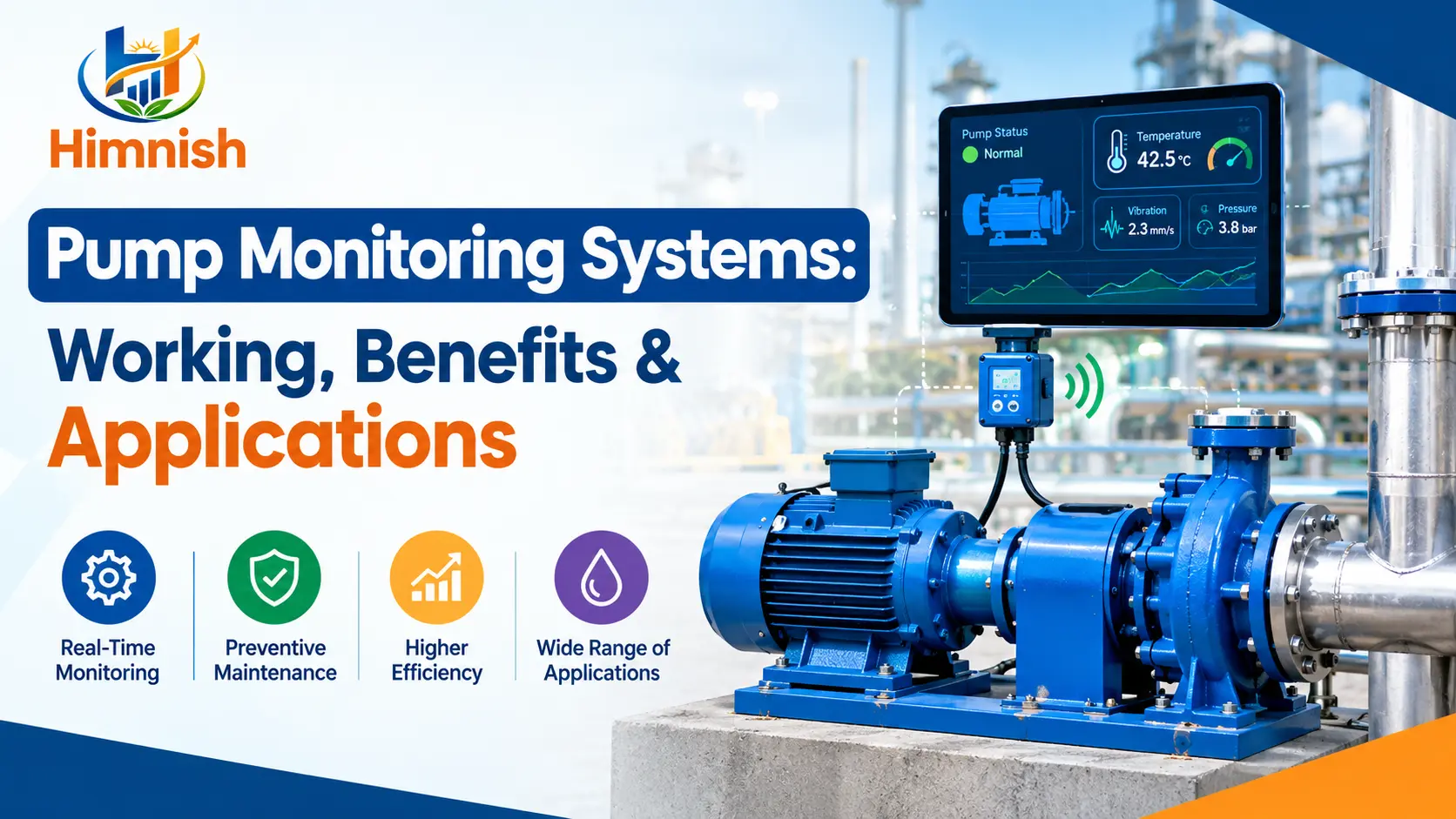
A pump monitoring system helps businesses keep track of pump performance and identify unusual operating conditions before they become major problems. By continuously collecting information such as pressure, flow, temperature, vibration, current, and operating status, the system gives operators a clearer view of pump health.
Modern monitoring solutions can also connect pumps to centralized dashboards, allowing teams to monitor equipment remotely. This makes pump monitoring useful for manufacturing plants, water-treatment facilities, irrigation systems, utilities, oil and gas facilities, and many other industries.
What Is a Pump Monitoring System?
A pump monitoring system is a combination of sensors, measuring devices, communication equipment, software, and control interfaces used to monitor pump operation.
The system collects real-time information from the pump and its connected equipment. This information can then be displayed on a local control panel, computer, mobile device, or centralized monitoring platform.
Depending on the application, a monitoring system can track:
- Pump running and stopping status
- Flow rate
- Suction and discharge pressure
- Motor current
- Voltage
- Temperature
- Vibration
- Speed
- Energy consumption
- Water level
- Fault and alarm conditions
The exact parameters depend on the type of pump, application, and monitoring requirements.
Also Read: Energy Monitoring Systems: Reduce Power Consumption & Downtime
How Does a Pump Monitoring System Work?
The working principle is relatively simple. Sensors installed at important points around the pump collect operating data. A controller or data-acquisition device receives this information and transfers it to the monitoring software.
The process generally works in four stages.
1. Data Collection
Sensors continuously measure parameters such as pressure, flow, temperature, vibration, and motor current.
2. Data Processing
The collected signals are processed through a controller, PLC, gateway, or monitoring device. Predefined operating limits can be used to identify abnormal conditions.
3. Remote or Local Monitoring
The information is displayed through a dashboard or control interface. Operators can check pump conditions without necessarily being physically beside the equipment.
4. Alerts and Corrective Action
If a monitored parameter goes outside its acceptable range, the system can generate an alarm or notification. Maintenance personnel can then investigate the problem and take appropriate action.
This approach helps move maintenance from simply reacting to failures toward more planned and condition-based maintenance.
Remote Pump Monitoring System
A remote pump monitoring system allows operators to view pump performance from a location away from the actual equipment.
This can be especially useful when pumps are installed across large industrial sites, remote water facilities, borewells, irrigation networks, or multiple pump stations.
Through a connected monitoring platform, users may be able to view:
- Pump operating status
- Current and historical performance
- Pressure and flow readings
- Motor parameters
- Alarm notifications
- Runtime information
- Energy consumption
- Maintenance-related data
Remote monitoring reduces the need for frequent physical inspections when routine observation can be performed digitally. It can also help maintenance teams respond faster when an abnormal condition is detected.
Pump Station Monitoring Systems
Large water-supply and wastewater facilities often have multiple pumps operating together. Monitoring each pump individually can become difficult without a centralized system.
Pump station monitoring systems provide a way to bring information from multiple pumps and related equipment into one monitoring platform.
A pump station monitoring setup may monitor:
- Pump start/stop status
- Tank or reservoir levels
- Flow rates
- Pressure
- Motor current
- Valve status
- Pump faults
- Power consumption
- Vibration
- Operating hours
Centralized monitoring gives operators a better understanding of how the complete pump station is performing rather than looking at individual machines separately.
Well Pump Monitoring System
A well pump monitoring system is designed for applications where pumps operate in borewells or groundwater systems.
Well pumps may be located in areas that are difficult to access regularly. Monitoring can therefore provide useful information about pump operation without requiring constant physical inspection.
Depending on the installation, a system may track water level, pump status, motor current, flow, pressure, voltage, and other parameters.
If the pump begins operating outside its normal conditions, an alarm can notify the responsible team so that the situation can be investigated.
Vibration Monitoring System for Pumps
Vibration is an important indicator of rotating equipment condition. Pumps and their motors naturally produce some vibration during operation, but a significant change from normal operating behavior may indicate a mechanical issue.
A vibration monitoring system for pumps uses sensors to measure vibration levels at selected points on the pump or motor.
Changes in vibration patterns may be associated with issues such as:
- Misalignment
- Unbalance
- Bearing wear
- Mechanical looseness
- Coupling problems
- Certain hydraulic problems
Vibration monitoring should be considered alongside other measurements rather than as a standalone diagnostic method. When vibration data is combined with temperature, current, pressure, and flow information, maintenance teams can gain a more complete picture of equipment condition.
Benefits of Pump Monitoring Systems
1. Early Fault Detection
Continuous monitoring can help identify unusual operating conditions earlier than periodic manual inspections.
2. Reduced Unplanned Downtime
When developing problems are identified early, maintenance teams have more opportunity to schedule inspections and repairs before a complete failure interrupts operations.
3. Better Maintenance Planning
Historical operating data can help maintenance teams understand equipment behavior and plan inspections based on actual operating conditions.
4. Improved Pump Performance
Monitoring pressure, flow, current, and other parameters helps operators identify conditions that may affect pump efficiency or performance.
5. Reduced Maintenance Costs
Early detection can help prevent minor issues from developing into more expensive equipment failures. It can also reduce unnecessary maintenance by providing useful condition information.
6. Improved Safety
Monitoring abnormal conditions remotely can reduce the need for personnel to repeatedly enter certain equipment areas, particularly in challenging industrial environments.
7. Centralized Data
Multiple pumps can be monitored through a common dashboard, making it easier to compare equipment performance and review historical trends.
Pump Station Monitoring for Water and Wastewater Facilities
Water and wastewater infrastructure depends heavily on reliable pumping. A failed pump can affect water supply, drainage, sewage movement, or treatment operations.
Pump station monitoring can help operators keep track of pump status and important process conditions.
For example, a wastewater pumping station may use level sensors to determine when pumps should operate while monitoring motor current, flow, and fault status. Operators can receive alerts when the water level becomes abnormal or a pump fails to start.
This type of monitoring can support more reliable operation and help teams manage multiple stations from a centralized location.
Industrial Applications of Pump Monitoring
Pump monitoring technology can be used in many industries and infrastructure applications.
Manufacturing Plants
Pumps are used for cooling water, process fluids, chemicals, lubrication, and other industrial operations. Monitoring helps maintenance teams track critical equipment.
Water Treatment Plants
Water-treatment facilities use pumps throughout raw-water intake, treatment, filtration, and distribution processes.
Wastewater Treatment
Monitoring helps track pumps responsible for moving wastewater, sludge, and treated water.
Oil and Gas
Pumping systems are used for transferring and circulating various fluids. Monitoring can provide operational information for critical equipment.
Agriculture and Irrigation
Well pumps and irrigation pumps can be monitored to understand operating status, water flow, and electrical performance.
HVAC Systems
Pumps used for chilled water, condenser water, and heating systems can also benefit from continuous monitoring.
Choosing the Right Pump Monitoring Solution
The right monitoring setup depends on pump type, operating environment, criticality, and available infrastructure.
Important considerations include:
- Number of pumps to be monitored
- Required measurement parameters
- Local or remote monitoring requirements
- Sensor compatibility
- Communication method
- Alarm requirements
- Data storage and reporting
- Integration with PLC, SCADA, or BMS systems
- Future expansion requirements
A scalable system can be particularly useful for facilities planning to add pumps or additional monitoring points in the future.
Conclusion
A pump monitoring system provides valuable information about pump operation and equipment condition. By monitoring parameters such as pressure, flow, temperature, current, and vibration, businesses can identify abnormal conditions, improve maintenance planning, and reduce the risk of unexpected failures.
From a remote pump monitoring system for isolated equipment to pump station monitoring systems for large water infrastructure, monitoring technology can be adapted to different applications. A well pump monitoring system can provide useful visibility for remote groundwater installations, while a vibration monitoring system for pumps can support condition-based maintenance of rotating equipment.
For industries where pump reliability directly affects production or essential services, continuous monitoring can become an important part of a modern maintenance and automation strategy. Himnish Projects provides industrial monitoring and automation solutions designed to help businesses improve equipment visibility, operational reliability, and process efficiency.